

Part 2
My apps did work.
They did the strange things I had imagined they should do for their users, a.k.a.: to put quite some power and ease of use into a very obscure aspect of the average corporate office, the ability to control your work phone.
By that I mean both the black object sitting on your desk as well as the phone number tied to it. The ‘things’ were the few PBX services that the average person mostly never uses, even if they are available, because no one is able to remember how to setup, activate or deactivate a business voicemail system.
And others, as well, that no PBX I knew about could ever come close to.
Indeed already back in 2013 cellphones were getting the norm and had started displacing landlines, both for home and business use. But landlines had not disappeared, nor phones on desks at work. PBXs did still matter.
Even I had ‘a few’ desk phones – but this is another story.
Smartphones -that is: the iPhone– were on the rise. User numbers were growing at rates that the experts -whoever they were- defined as unbelievable.
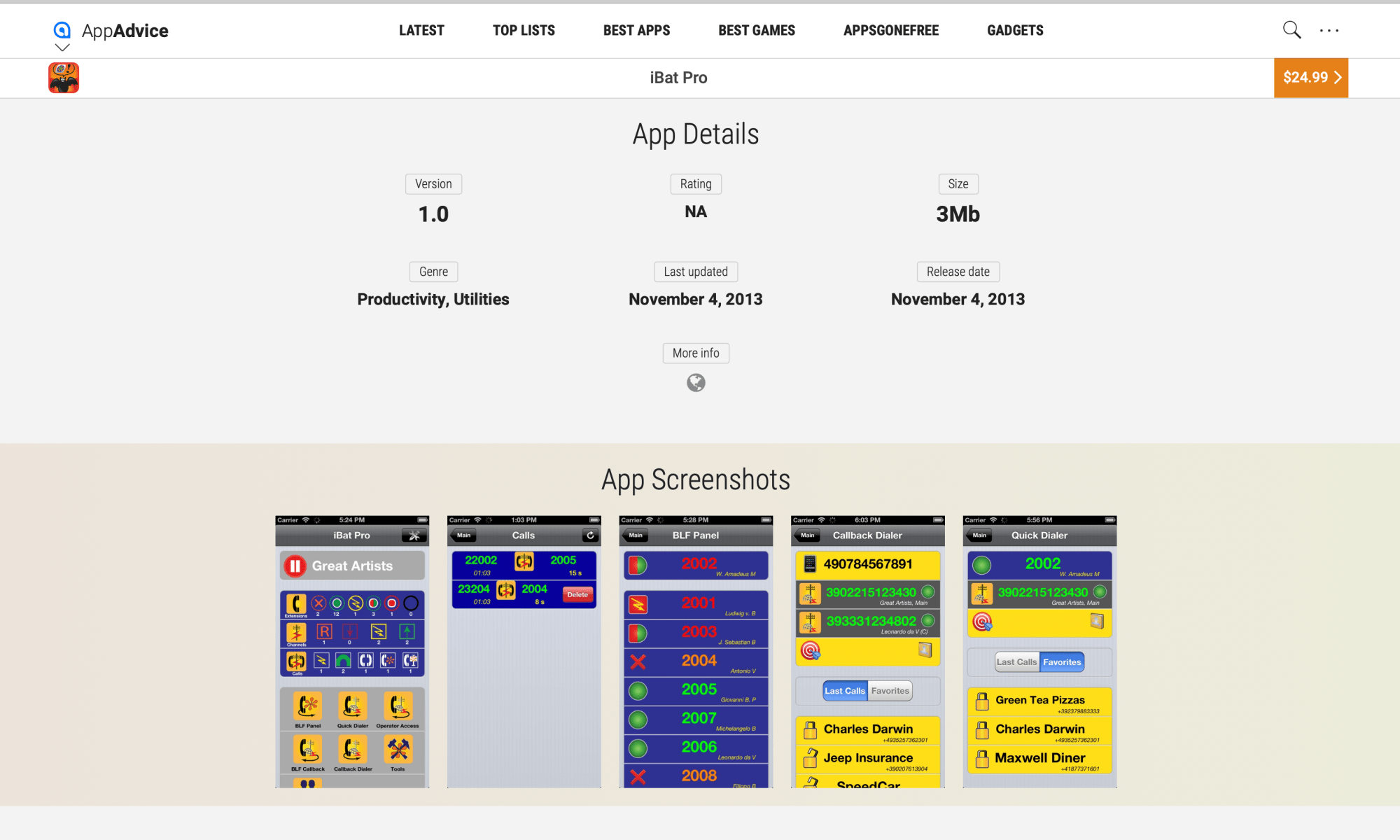
None of the usual sequences of hash symbols, command codes for each custom PBX function had to be at your fingertips to get the transfer or the bounce of a call done. You got real time call alerts for your office line on the iPhone, while you were out of reach of your physical desk phone. No matter what the telephony workflow the user had on screen, it had a human interface unique to the function – done the iPhone way: graphically, with dedicated buttons for each function, with specific visual feedback along the way.
My mobile development work had evolved out of a well celebrated situation: someone (me) had seen the possibility to write a piece of software that seemed the logical answer to a question only the developer could ask.
“Would it not be really nice to filter the business calls one gets on his/her work phone number and seamlessly pass them to the cellphone, when off work or out of the office, controlling the whole process directly on the handy user interface of the iPhone?”. Easily?
Even if one is somewhere out there, long gone from the office?
Even while never rejecting any of the calls you were keen to receive?
While seamlessly returning those important, missed, out-of-hours calls?
My answer, about four years before November 4th, 2013, had been “yes” – and, more: “I can be the one who makes this idea work”.
I barely hint at the side thought ‘how difficult can it possibly be?’.
Well, it may not have been really difficult on a grand scale of things, but it took quite some time to me, while learning the basics of iPhone development and solving issues about real time event processing on a tiny computing platform – those were the times of the iPhone 4.
It was a long journey, from the initial surprise the day I saw how in very few lines of Objective-C I could have any office phone ringing at will, commanding Asterisk from my MacBook.
Colleagues made it evident, though, that any further work on my new PBX project had better be done silently.
But the ‘iBat project’ was on the way.
 ialtóg